


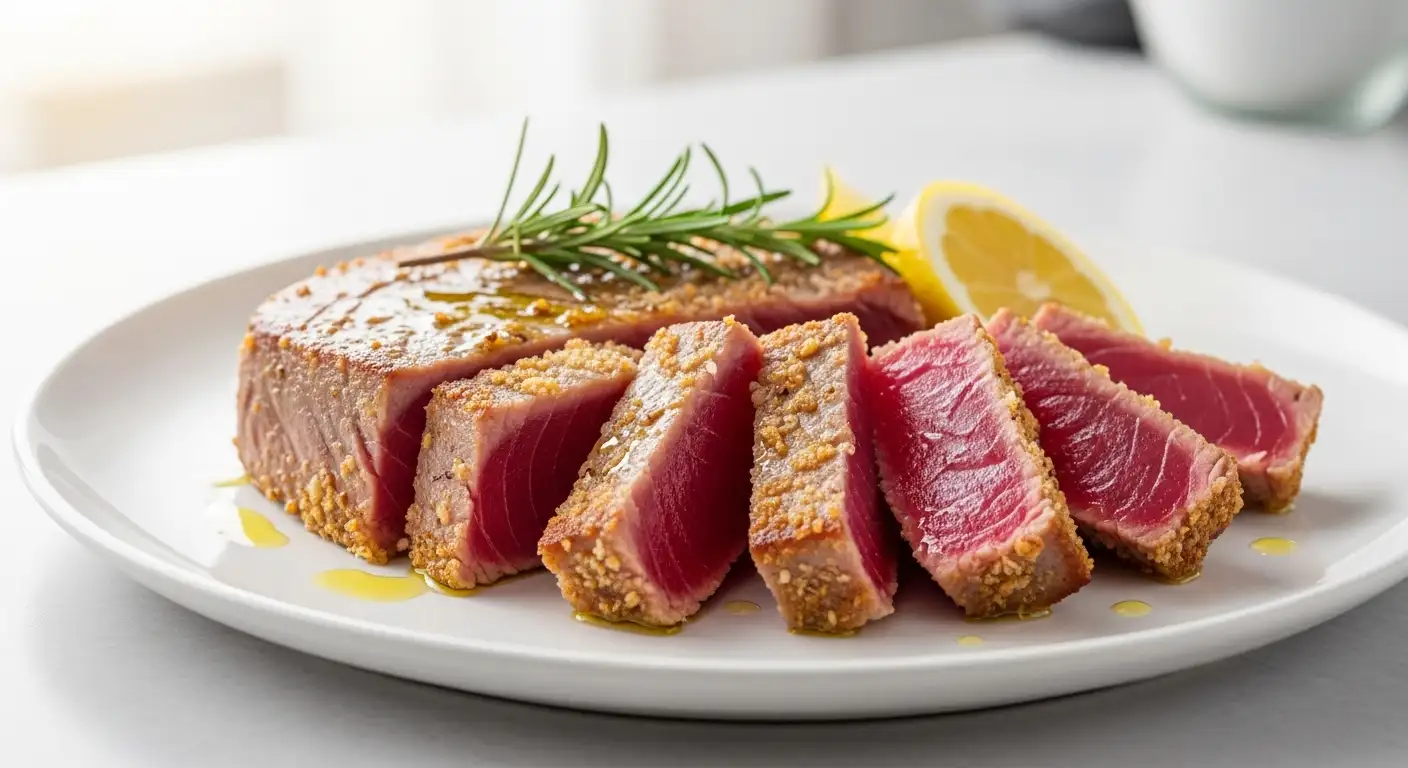
There’s an art to cooking the perfect tuna steak-a delicate balance between searing the outside to a tantalizing crisp while preserving the luscious, tender center that makes this fish a culinary treasure.At the heart of this mastery lies one crucial element: internal temperature.Knowing exactly when your tuna reaches that ideal warmth can transform your steak from ordinary to remarkable, unlocking bold flavors and a melt-in-your-mouth texture.
In this article, we’ll dive deep into the science and secrets behind mastering internal temperature, providing you with tips and techniques that ensure every tuna steak you serve is nothing short of perfection. Whether you prefer it rare, medium-rare, or just a touch beyond, get ready to elevate your tuna game-one precise degree at a time.
Perfect Tuna Steak: Mastering Internal Temperature Tips
Perfect Tuna Steak: Mastering Internal Temperature tips starts with understanding how internal temperature transforms texture and flavor. Whether you crave a sashimi-like center or a more cooked-through bite, knowing the doneness levels elevates your cooking confidence and delightfully awakens your palate. I still remember the first time I achieved a medium-rare tuna steak that melted like butter – it was a game changer, inspiring countless meals with that perfect sear and vibrant pink center.
prep and Cook Time
- Preparation: 10 minutes
- Cooking: 6-8 minutes
- Total: 20 minutes
Yield
Serves 2 people
Difficulty Level
Medium
Ingredients
- 2 tuna steaks (6 oz each, about 1-inch thick)
- 2 tbsp olive oil, extra virgin
- 1 tsp sea salt
- ½ tsp freshly ground black pepper
- 1 tbsp soy sauce (optional, for marinating)
- 1 tsp toasted sesame seeds (optional garnish)
- Fresh lemon wedges, for serving
understanding Tuna Steak Doneness Levels for Ultimate Flavor
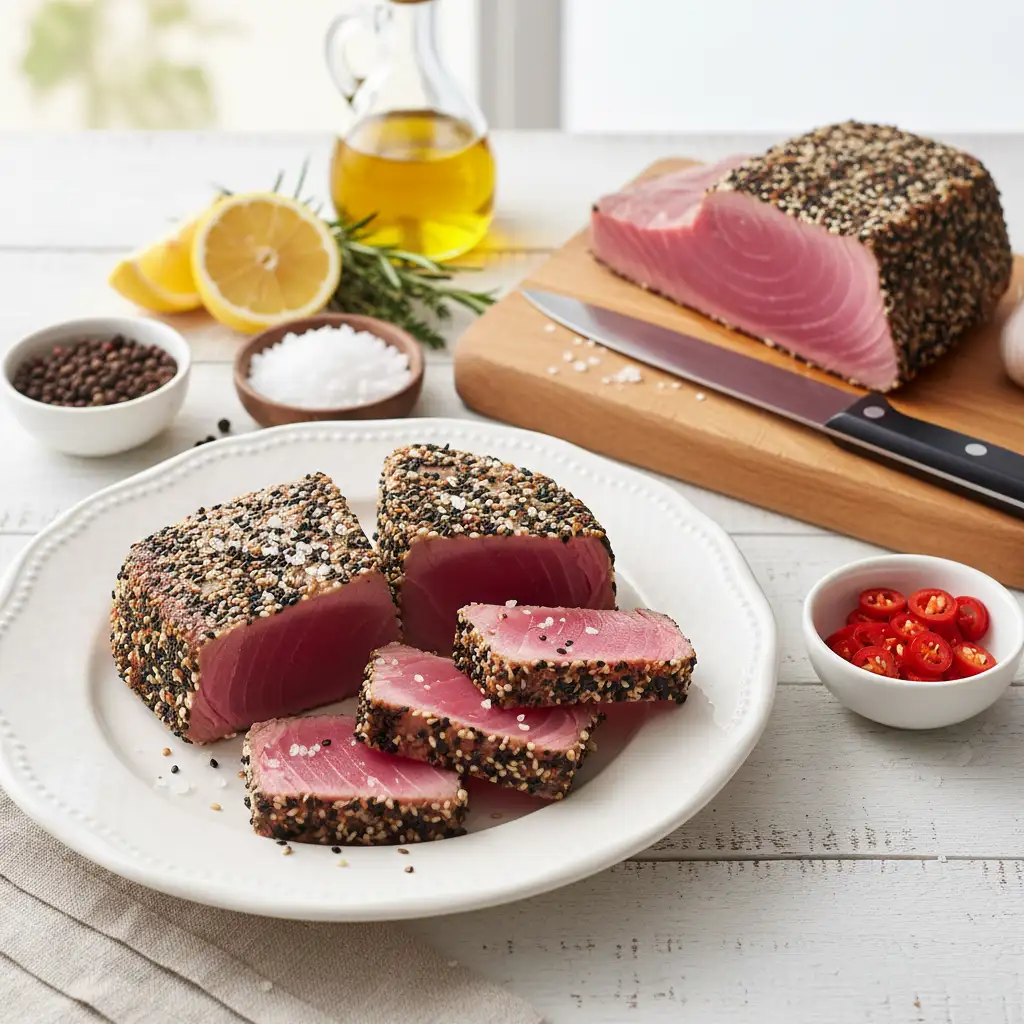
The magic of tuna lies in its unique texture and flavor that drastically change with temperature. Rare: Bright red with a cool center, offering a buttery, melt-in-your-mouth texture. Medium-rare: Warm pink interior with a firm but tender bite, typically achieved at 115-120°F (46-49°C).Medium: Slightly opaque center, cooked to about 125°F (52°C), firmer with some flakiness. Anything beyond medium risks overcooking, leading to dryness and a less vibrant flavor.
Choosing the Right Thermometer to Accurately Measure Internal Temperature
Precision is key when mastering tuna doneness,so invest in an instant-read digital thermometer designed for rapid,accurate results. Thin tuna steaks require a probe that can quickly register temperature without lingering too long-avoid traditional dial thermometers that take longer. Popular options include ThermoWorks Thermapen or Lavatools Javelin, reliable tools that keep you informed every step of the way.
Step by Step Guide to Achieving Perfect Medium Rare Tuna Steak
- Prep your tuna. Pat steaks dry to ensure a perfect sear. Lightly brush both sides with olive oil, then sprinkle evenly with salt and pepper. If desired, marinate in soy sauce for 10 minutes upfront for a gentle umami boost.
- Heat your skillet. use a heavy-bottomed pan or cast iron over medium-high heat. Let it get smoking hot – this ensures a caramelized crust without overcooking the inside.
- Sear the tuna. Place steaks gently in the pan. Sizzle each side for 1.5-2 minutes without moving, forming a tasty golden-brown crust. Flip carefully with tongs.
- Check the internal temperature. Instantly insert your instant-read thermometer into the thickest part. Remove from heat when it reads 115-120°F (46-49°C) for that coveted medium-rare.
- Rest the steak. Let the tuna rest on a cutting board for 3 minutes; this allows carryover cooking and juices to redistribute, enhancing flavor and tenderness.
- Slice and serve. Cut against the grain into ½-inch thick slices, garnish with toasted sesame seeds and lemon wedges for bright, fresh notes.
Common Mistakes to Avoid When Cooking Tuna for Ideal Texture and Taste
- Overcooking: Tuna cooks fast; even a minute too long risks a dry, chalky result. Always monitor internal temperature closely.
- Skipping the thermometer: Relying solely on sight can be misleading-color varies with freshness and quality.
- Not drying the fish: Moisture on the surface prevents proper searing and creates steam rather of crust.
- Using low heat: Without a hot pan, the tuna won’t get that crunchy exterior contrast that makes this dish remarkable.
- Forgoing rest time: Serving immediately can mean juices run out and steak ends up less juicy.
Chef’s Notes
For a bold twist,add a crust of crushed black peppercorns or sesame seeds before searing. Tuna pairs beautifully with ginger, wasabi aioli, or a drizzle of ponzu sauce for Asian-inspired flair. If fresh tuna isn’t available, sashimi-grade frozen tuna is a worthy alternative – just thaw gently in the fridge. Keep leftovers wrapped tightly and consume within 24 hours for best taste.
Serving Suggestions
Present your tuna steak atop a bed of lightly dressed mixed greens or alongside chilled soba noodles tossed in soy and sesame oil. Garnish with microgreens for a pop of color and texture. Add a wedge of lemon or lime and a side of pickled ginger to balance the rich, meaty flavor with acidity and brightness. Serve with a chilled crisp white wine or a light lager to complement the clean flavors.

| Nutrient | Amount (per serving) |
|---|---|
| Calories | 210 kcal |
| Protein | 38 g |
| Carbohydrates | 0 g |
| Fat | 6 g |
For more seafood expertise, explore our article on How to Make the Best Seared Salmon. To deepen your knowledge of seafood safety and cooking temperatures,visit the FDA Seafood Safety Guidelines.
Q&A
Q&A: Perfect Tuna Steak – Mastering Internal Temperature tips
Q1: why is internal temperature so crucial when cooking tuna steak?
A1: Tuna is a prized catch because of its tender,meaty texture and rich flavor. But getting it right hinges on internal temperature-too raw, and it might be unsafe or overly fishy; too done, and you lose that buttery, melt-in-your-mouth quality.The perfect temperature ensures safety while preserving that signature tuna steak silkiness.
Q2: What is the ideal internal temperature for a perfect tuna steak?
A2: Aim for around 115°F (46°C) if you like your tuna rare-that’s seared on the outside with a vivid ruby-red center. For medium-rare, 120-125°F (49-52°C) works beautifully, offering a slightly firmer texture but still juicy. Anything beyond 130°F (54°C) starts edging toward well-done, wich can dry out this delicate fish.
Q3: How do I accurately measure the tuna steak’s internal temperature?
A3: Invest in a reliable instant-read digital thermometer. Insert it into the thickest part of the steak,avoiding the pan or grill surface.This precision tool takes the guesswork out of the equation, guiding you to that perfect doneness every time.
Q4: Can I rely on cooking time alone to judge doneness?
A4: Cooking times can vary wildly due to tuna steak thickness, heat intensity, and even ambient temperature. While a quick sear might seem enough, internal temperature is king. Always confirm with a thermometer rather than relying solely on timer or visual cues.
Q5: What’s the best cooking method to control the internal temperature?
A5: Pan-searing or grilling over high heat are classic methods that develop a flavorful crust while letting you monitor heat closely. Finishing in a low-temperature oven or using a sous vide technique gives even more control, ensuring the steak cooks perfectly from edge to center.
Q6: Is it safe to eat tuna steak rare?
A6: Yes, when sourced fresh and sushi-grade, rare tuna is safe and delicious. The key is temperature control and freshness. Eating it rare showcases tuna’s luxurious texture and flavor, but always confirm your source is top quality.
Q7: Any tips for resting tuna steak after cooking?
A7: Absolutely! Let your tuna steak rest for 3-5 minutes after cooking. The residual heat will gently even out the temperature and redistribute juices, making each bite succulent and tender.
Q8: Can I reheat tuna steak without ruining its texture?
A8: Gently does it! Use low heat, like a brief warm-up in a skillet or a low oven setting. High heat will overcook and dry out the steak, turning your culinary masterpiece into a rubbery shadow of itself.
With these temperature-savvy tips,your next tuna steak will be a sea-born triumph-succulent,juicy,and cooked just right every time!
The Way Forward
Achieving the perfect tuna steak is as much a science as it is an art,and mastering the internal temperature is your key to unlocking its full potential. Whether you crave a rare, sashimi-like center or a more thoroughly cooked bite, understanding the precise heat at which tuna transforms will elevate your culinary game. So next time you fire up the grill or heat your skillet, remember: temperature isn’t just a number-it’s the secret ingredient that turns a simple fish into a masterpiece. Happy cooking, and may your tuna steaks always be perfectly done, every time.
Estimated Nutrition
Total Calories: 914 kcal
AI-based estimation tool – values may vary


